Merch Without the Back-and-Forth
A small experience business in Austin wanted to sell branded t-shirts. The traditional approach: hire a designer, go through rounds of revisions, pick a design you hope customers like, order inventory, and pray it sells.
The owner had a different idea: let customers design their own shirt from a set of brand elements, vote on combinations, and only produce what people actually want.
A Complete Design-to-Vote Pipeline
Interactive Design Builder
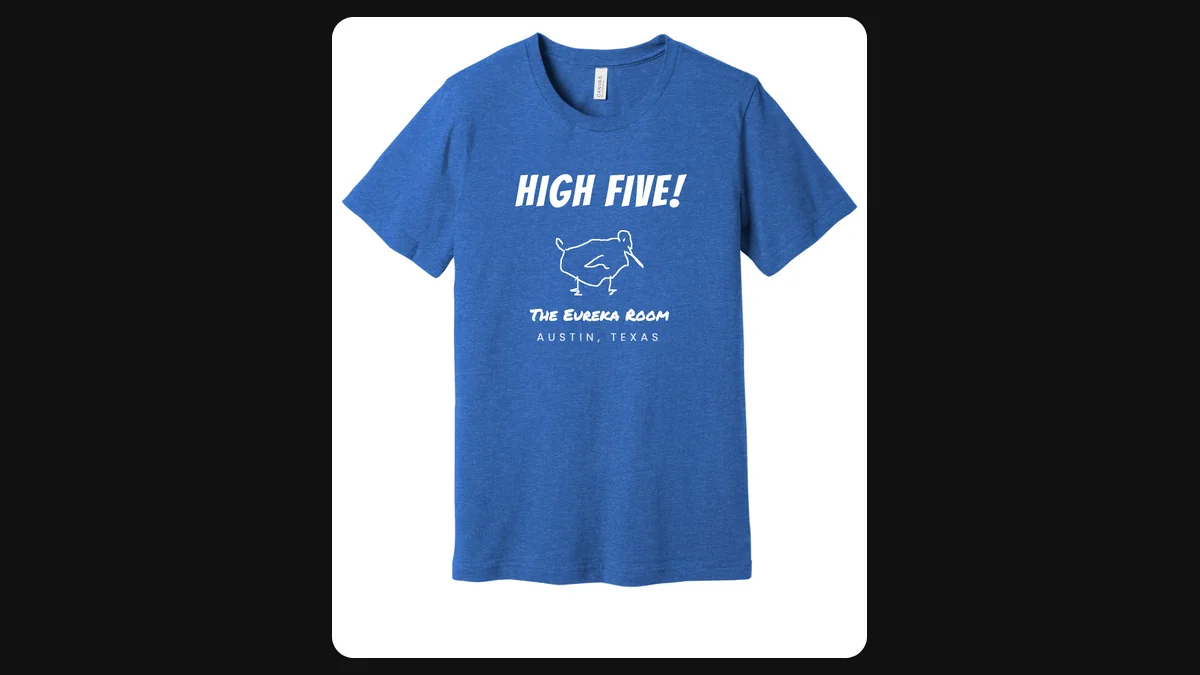
Customers mix and match brand elements: choose a graphic (bird or toast), pick a phrase, select a shirt color. The preview updates live — they see exactly what their combination looks like on a real shirt mockup.
Live Shirt Previews
AI-generated mockups on real Bella+Canvas 3001 blanks. Multiple colors (black, grey, red, mustard, royal blue). The graphic composites onto the shirt in real time as customers make selections.
Voting System
Customers submit their favorite design combination. Votes are tracked and stored. The business sees which combinations are actually popular before ordering any inventory.
Public Results Page
A live results page shows vote tallies by design, color, and phrase. Customers can see what's winning. Creates buzz and repeat visits.
Zero Inventory Risk
The traditional merch process is a gamble. You pick a design, order 50 shirts in assorted sizes, and hope they sell. If the design is wrong, you eat the cost.
This flips the model: let customers tell you what they want before you order anything. The data from the voting system directly informs the production run. No guesswork, no dead inventory.
Custom Internal Tools Don't Have to Be Expensive
A design picker with live previews, a voting system, and a results dashboard sounds like a project you'd spec out with a developer and spend $5,000+ on. With AI, it was built in an afternoon, deployed for free, and does exactly what the business needs.
Small businesses have ideas like this all the time. They just never build them because the cost doesn't justify it. AI changes that equation entirely.